
Seven Things the Events Industry Is Telling Us Right Now
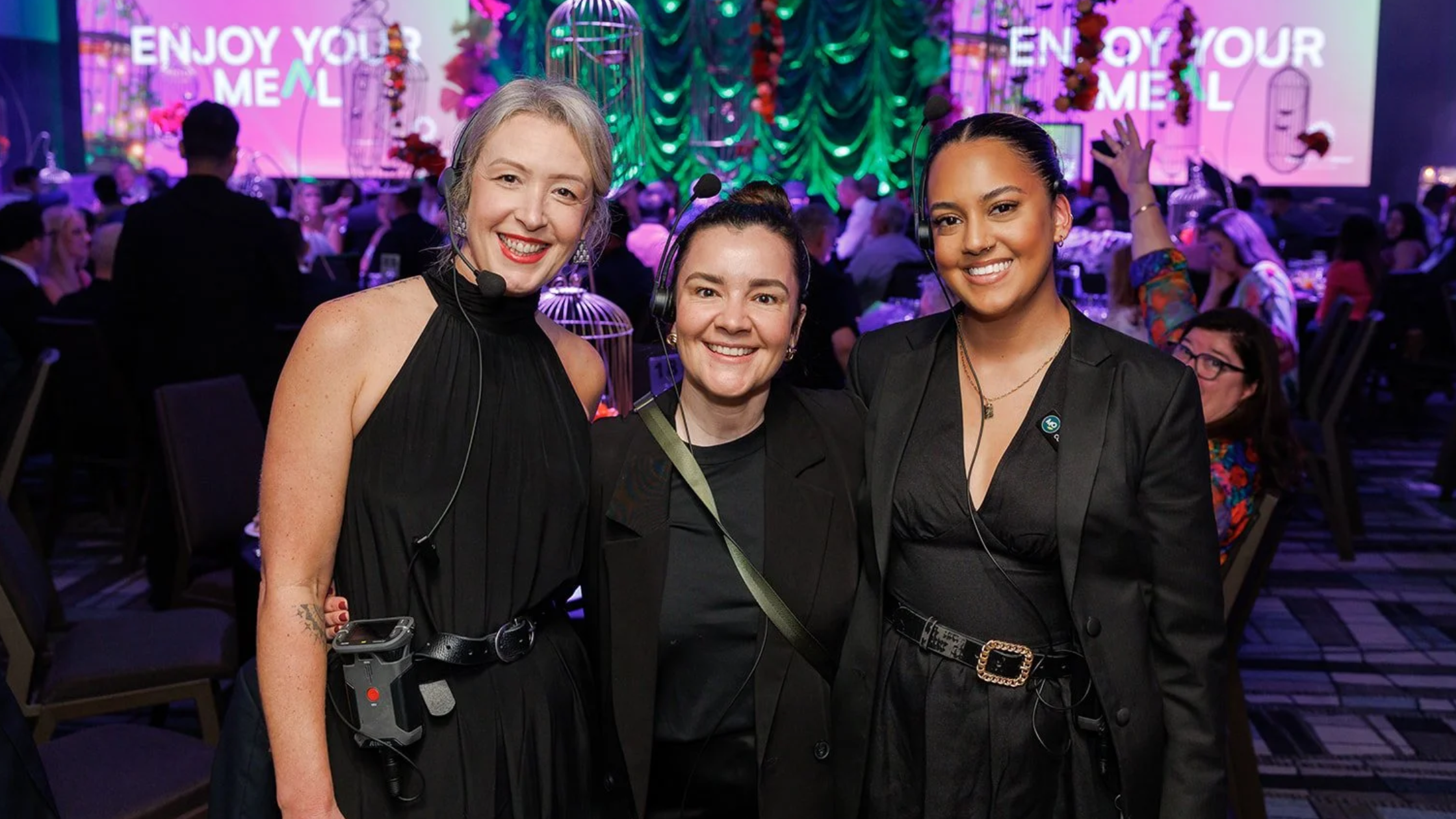
Q1 is done. Here's what we actually saw. Not what the trend reports say, but what clients are asking for, what delegates are responding to, and where the industry is quietly shifting.
Every quarter, we have hundreds of conversations with HR leads, marketing directors, and CEOs across New Zealand and Australia about their upcoming events. We pitch ideas, refine briefs, troubleshoot budgets, and get a close-up view of what's actually changing in the corporate events world. Not from a whitepaper, but from real client conversations.
Q1 of 2026 was particularly revealing. Here's what the market is telling us and what it means for how you should be thinking about your next event.
01 - Bi-annual events are here to stay, but the buzz gap is a real problem
The shift to two events per year rather than one annual conference is now firmly established. Clients aren't going back to the single-event model. But the challenge that's emerging? Keeping the energy alive between events.
When your team goes home from a June conference buzzing with ideas and connection, you have a narrow window to sustain that momentum before it quietly fades into the day-to-day. By October's event, you're essentially rebuilding from scratch.
"The event isn't the moment. It's the beginning of a moment. What happens between events is what determines whether the investment actually lands."
The smart play here is designing the two events as a connected narrative, not two separate programs. Event one sets a theme or challenge. Event two delivers the reckoning. The audience carries the thread between them. We're helping more clients think this way, and the results are measurably better.
02 - Galas are getting a serious rethink, and good riddance to the sit-down dinner
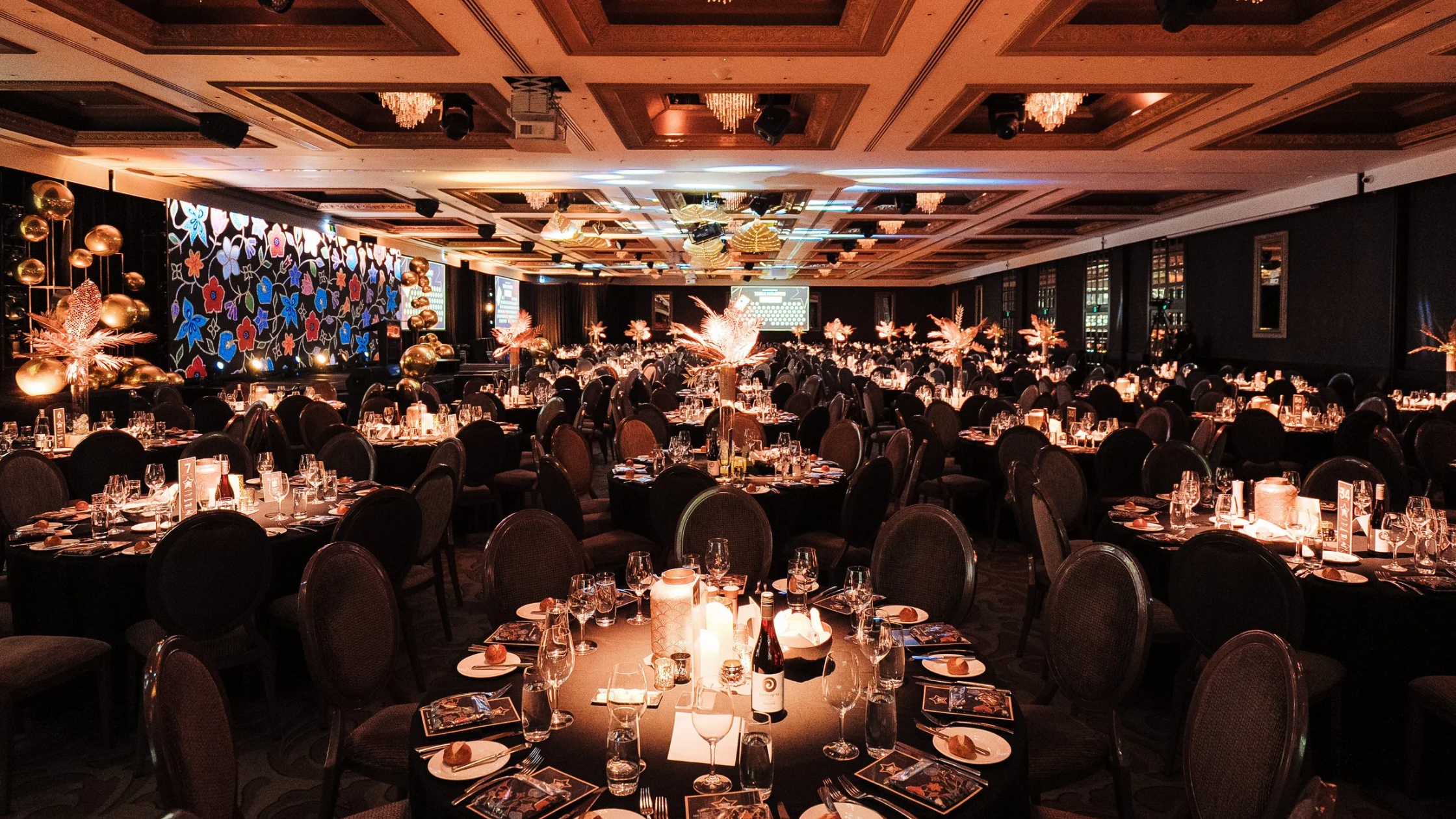
The traditional end-of-year gala format, three-course sit-down, speeches, award presentation, repeat, is quietly losing its grip on the market. This quarter alone we've had multiple clients come to us asking for something fundamentally different.
Food trucks. Live cooking stations. Interactive entertainment. A lunch format instead of a formal dinner. A roaming experience instead of rounds of eight. The request is consistent: make it feel like something, not just somewhere.
What's driving this? Partly generational. Younger workforces find formal seated events passive and disconnecting. Partly post-COVID. People value doing and experiencing over watching and waiting. And partly because the bar has been raised by the events people attend personally. If your Saturday night experience is a pop-up dining concept with interactive chefs, a three-course hotel ballroom dinner on Wednesday night starts to feel flat by comparison.
The best gala formats we're designing right now combine purposeful structure (so awards still land with weight) with genuine energy (so people don't check their phones between courses). That balance is harder to achieve than it looks, but when it works, it's the event people talk about for years.
03 - Kiwi companies are writing their own incentive playbook, not borrowing from Australia
For a long time, New Zealand businesses looked across the Tasman to see what Australian companies were doing on incentives and followed suit. That dynamic is shifting.
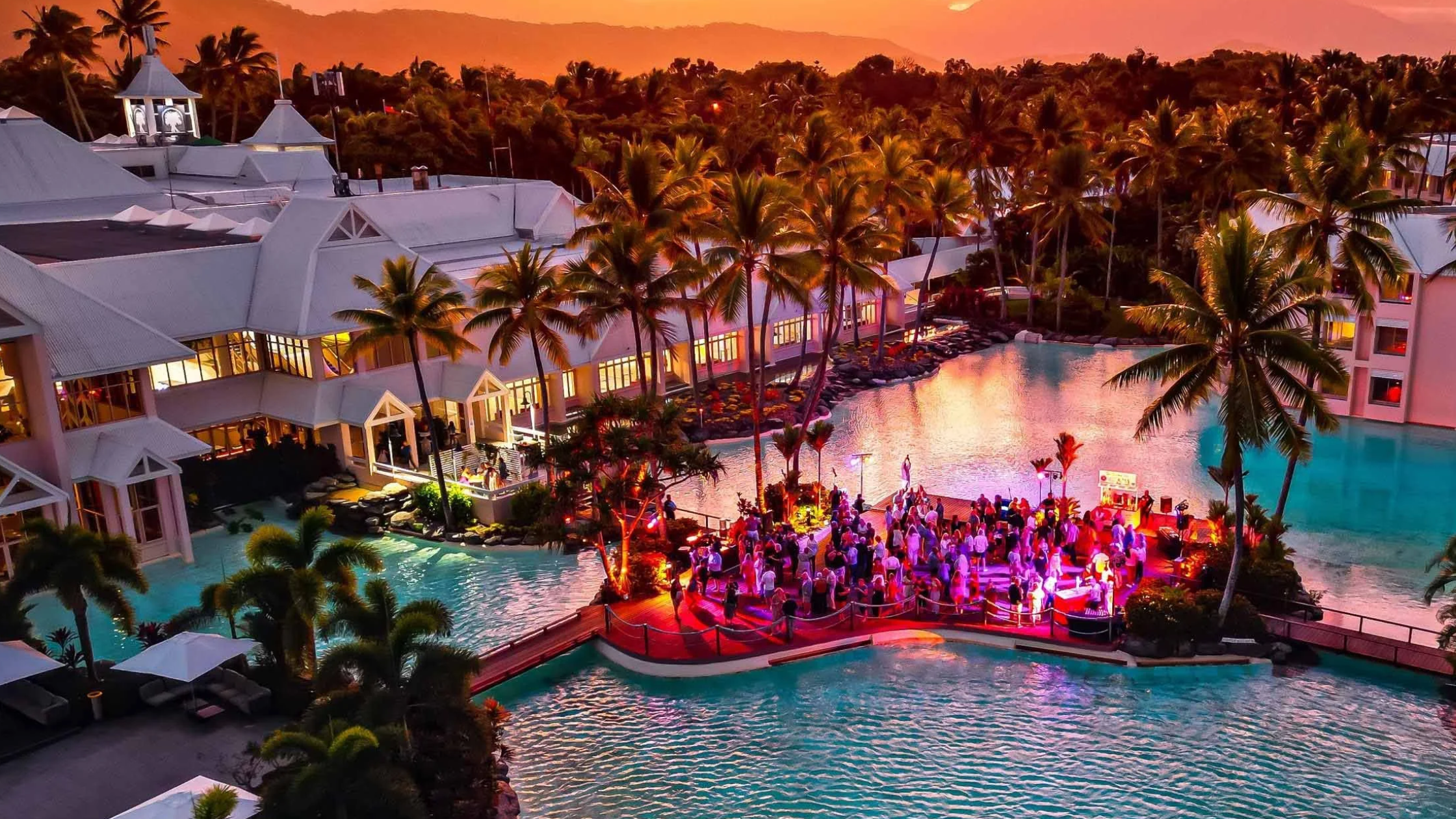
NZ corporates are increasingly designing incentive programs that reflect their own culture, values, and workforce, not adapting someone else's model. We're seeing more emphasis on genuine New Zealand experiences: the land, the culture, the unique adventure that only exists here. Less "let's do what the Sydney office did." More "what does our team actually need right now?"
This is a healthy and overdue shift. The most powerful incentive travel programs we've ever delivered are the ones that felt like they could only have been designed for that specific group of people. When an incentive is generic, people enjoy it. When it's made for them, they remember it forever.
04 - Australian clients are coming to New Zealand agencies. Here's why that makes sense.
This one might ruffle a few feathers across the Tasman, and that's fine.
We are seeing a clear and growing trend of Australian companies approaching NZ-based event agencies to quote on their events. Not just for events held in New Zealand, but for events delivered in Australia too.
Here's the honest reason: lower overhead structures mean NZ agencies can often deliver equivalent or superior outcomes at a more competitive price point. But more importantly, NZ agencies have had to prove themselves. We don't have the scale of our Australian counterparts, so we've always had to out-think, out-create, and out-service them. That hunger produces better events. Our proposals are more considered. Our programs are more original. Our teams are closer to the work. When an Australian client gives us a brief, we treat it like it matters, because for us, it does.
If you're a business in Australia looking for an event partner who is genuinely invested in your outcome, we'd love to have that conversation. The flight's short. The ideas are long.
05 - Trade shows that work in 2026 are hands-on, themed, and built for the suppliers
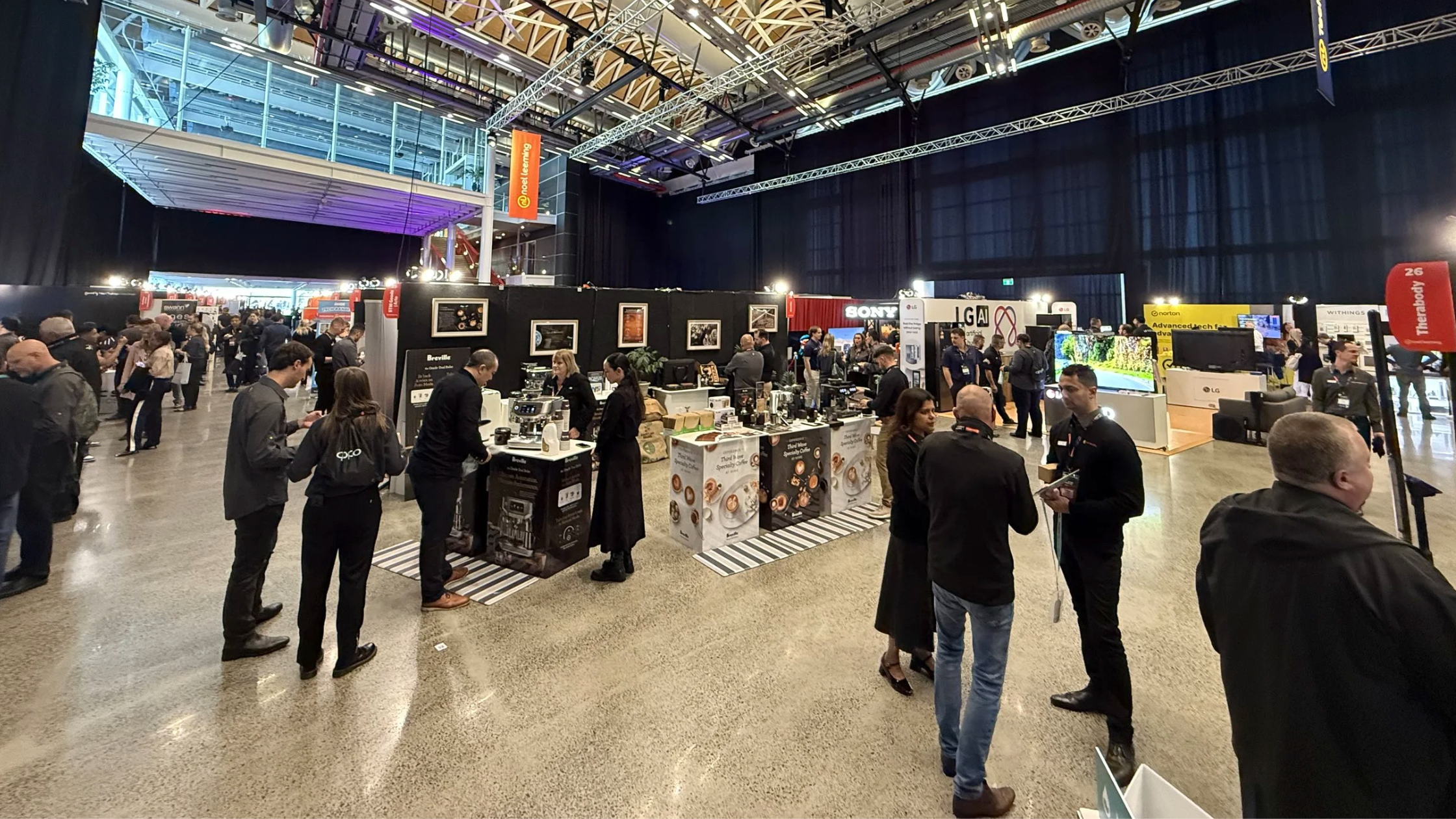
The trade show model of "booth, pull-up banner, bowl of lollies" is well and truly dead. What's replacing it is an experiential format that gives suppliers a real opportunity to show, not just tell.
We're designing trade show environments that are themed to create immersion, that give suppliers hands-on activation opportunities, and that treat supplier engagement as part of the event's overall story rather than an interruption to it.
"The best trade shows we've run recently feel like a destination in themselves. Delegates don't pass through them. They spend time in them."
When a supplier has a genuinely memorable moment with a delegate, something tactile, interactive, or surprising, the business relationship that follows is completely different to the one that starts with a handshake over a trestle table. The theme, the activation, and the space design all contribute to that.
06 - Conferences are getting sensory, interactive, and future-facing, and speakers are being asked to do more
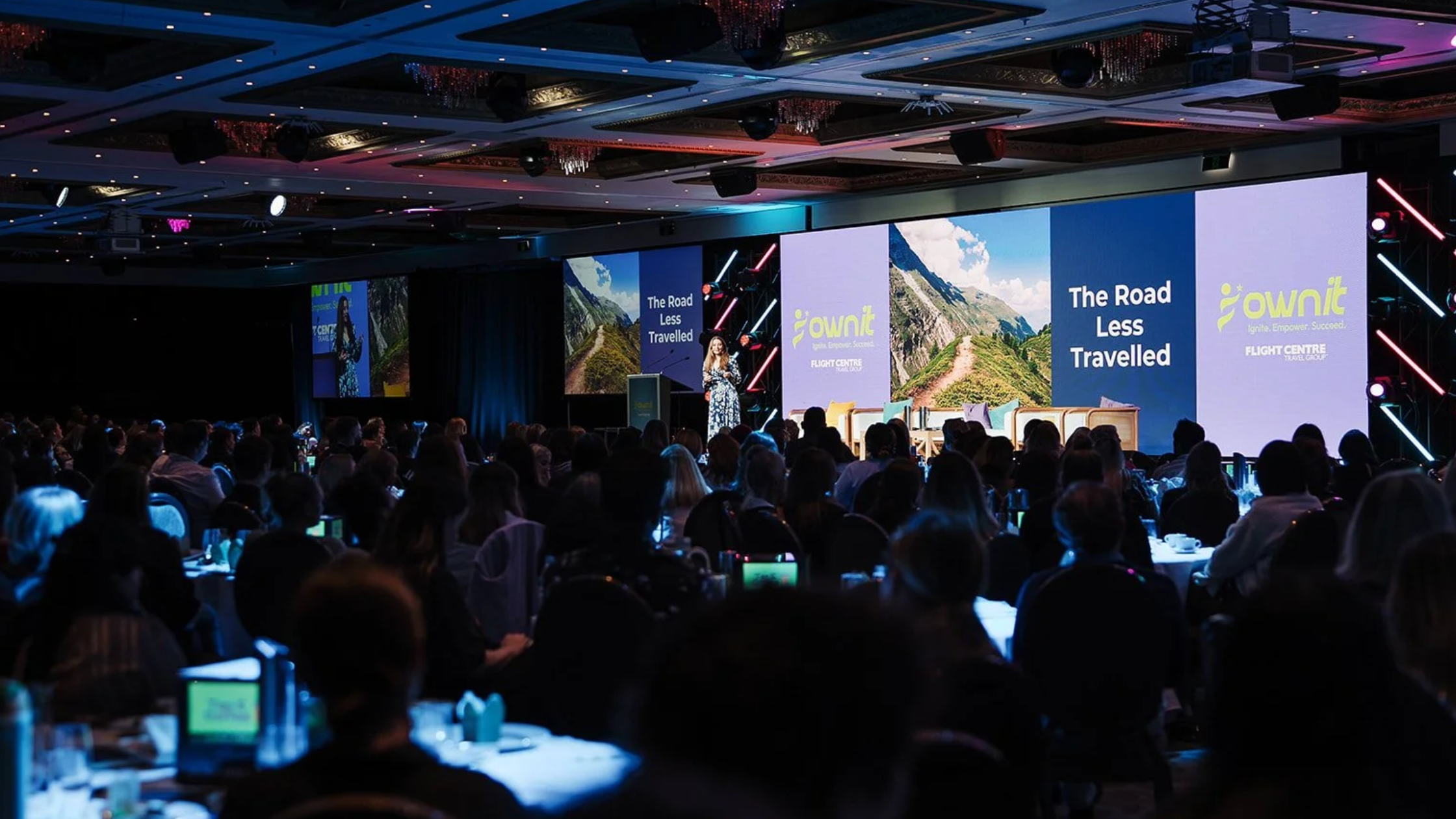
The keynote-heavy conference format, two speakers in the morning, one after lunch, close at 4:30, is losing its audience. Literally. Engagement data from our own post-event surveys tells the story clearly: delegates are more energised, more connected, and more positive about the day when the program is varied, interactive, and moves at pace.
What we're building instead: sensory breakouts, working sessions, shorter speaker slots, and formats that create dialogue rather than monologue. The conference room as a space for doing, not just listening.
And on speakers, the brief is changing too. Clients are increasingly asking for presenters who speak about what could be, not just what is. The audience wants to leave with a new frame of thinking, not a detailed summary of the current state. The best conference moments we've experienced this quarter came from speakers who challenged assumptions, provoked disagreement, and left the room with something unresolved to chew on. That discomfort is actually productive. It's what gets talked about in the bar afterwards.
If your conference agenda is still built around "update, update, update" (what each team has done this year) consider what it would look like if the whole program were reframed around "what are we going to do differently?" The energy in the room shifts immediately.
07 - AI will change event planning, but it won't replace the reason events exist
We use AI tools in our planning process. They save time on logistics, speed up communication, and improve the accuracy of supplier briefing documents. We're genuinely enthusiastic about what the technology can do for the operational side of our work.
But here's what we keep coming back to: AI doesn't win events. People do.
The reason a delegate travels for two days to be in a room with their colleagues is not something a digital tool can replicate. Connection is the product. The moment a CEO walks off stage and a junior team member approaches them, that's what the event was for. The dinner conversation that runs until midnight. The shared experience in a place far from the office that changes how a team sees each other.
AI will make the logistics cheaper and faster to manage. That's genuinely useful. But the more digital and efficient the infrastructure becomes, the more precious the human, tailored, high-touch delivery at the centre of an event becomes.
"Service, connection, and a program that was clearly made for this specific group of people. These are not things AI is coming for. They're the reason clients keep choosing agencies that care."
Our view: use the tools that save time on the parts of the job that don't require human judgment. Reinvest that time into the parts that do.
Seven trends. One through-line: the events that are landing hardest in 2026 are the ones where someone, at the agency, at the company, somewhere in the process, genuinely cared about what the experience would feel like.
That care shows up in the theming, the speaker selection, the flow of the day, the moment someone didn't expect. It's not expensive. It's intentional. And it's what we're here to help you build.
Planning an event for 2026 or 2027?
Whether it's a conference, an incentive trip, an award evening, or a Concentive, we'd love to start the conversation. Get in touch here.